Our Story
From Discovery
to Innovation
Where the science of sound meets the future of brain health.
The Foundation
Building on Groundbreaking Research
Nearly 30 years ago our co-founder, Dr. Edward Large, hypothesized neural entrainment to music: the idea that synchronization of neural oscillations occurs through nonlinear coupling between auditory stimuli and brain rhythms.1,2 Dr. Large's model specifically proposed that when listening to music, neurons in the brain adjust their oscillations to synchronize with the external stimulus, a process that can continue even after the stimulus ceases, and he published the first experiments to demonstrate neural entrainment to music.3-6
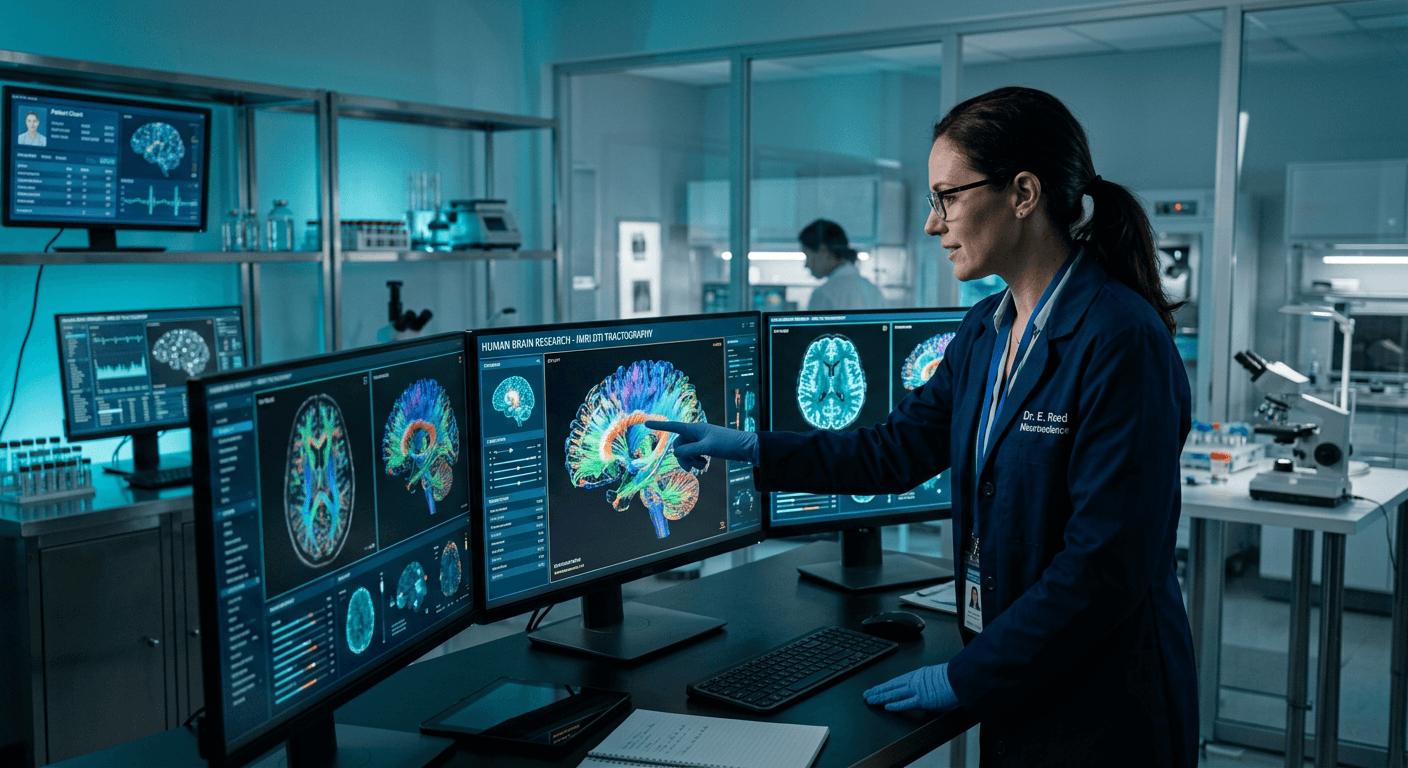
Research centers around the world have since verified the synchronization of neural rhythms to musical rhythms, in a series of findings that have profound implications. Realizing that this groundbreaking research on music and the physics of the brain might have therapeutic benefits for neurodegenerative diseases, Dr. Large and Dr. Ji Chul Kim founded Oscillo Biosciences in 2017 to develop music-based interventions for severe neurodegenerative diseases.
The Research
Exploring the Therapeutic Potential of Music
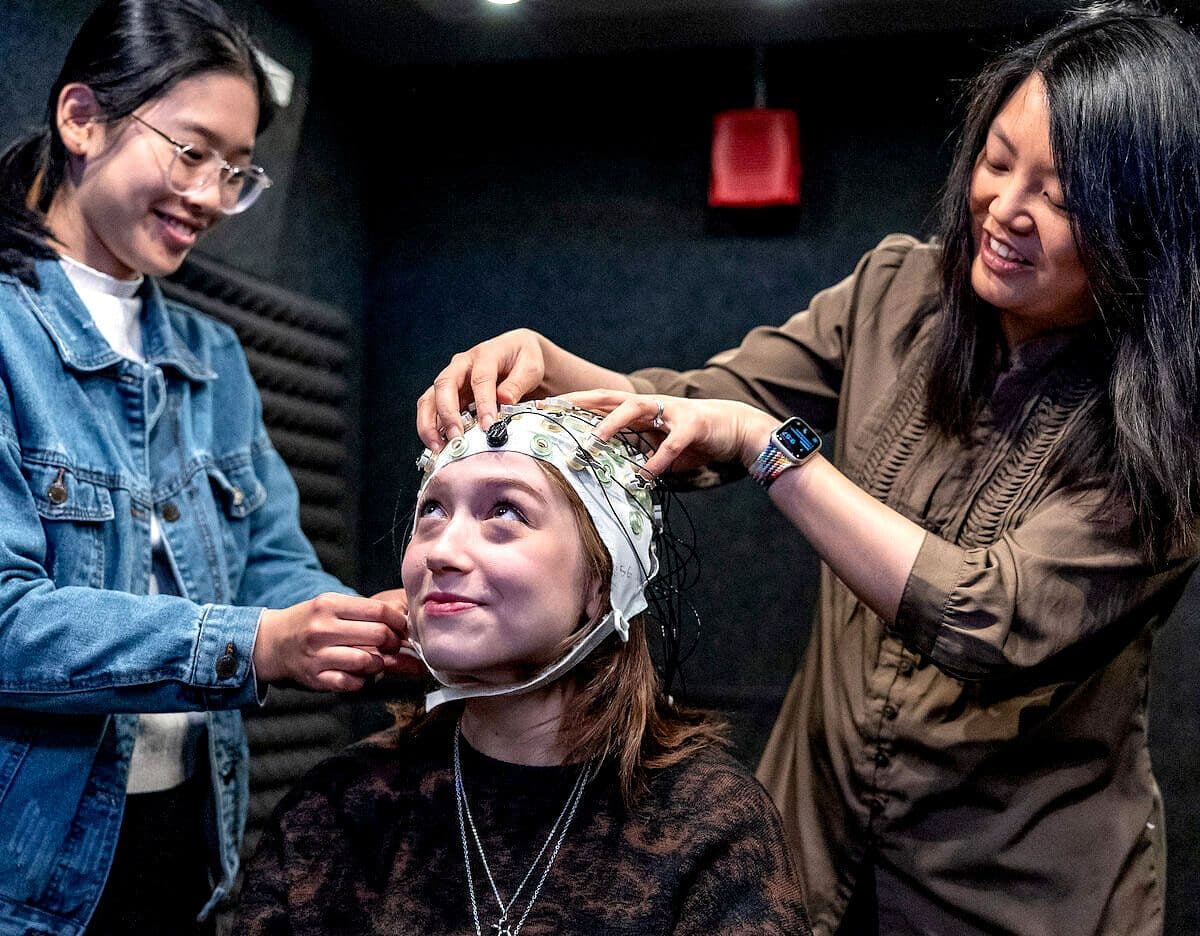
In collaboration with Dr. Psyche Loui and her team at Northeastern University, Large and Kim set out to explore the therapeutic potential of music, and to enhance its potential as a treatment modality. Their objective was to combine the power of music to activate multiple neural pathways associated with emotion and cognition, leveraging music's unique ability to synchronize neural oscillations. The successful implementation of this approach would hold significant promise for the treatment of neurological disorders, particularly Alzheimer's disease.
Through their research, the team discovered that when rhythmic light pulses at specific frequencies are synchronously combined with musical stimuli, it generates intense and sustained effects. This groundbreaking finding motivated the pursuit of Oscillo's first clinical application. The team is currently conducting an NIH-funded clinical trial7 (NCT05984524) involving patients with mild cognitive impairment and early-stage Alzheimer's disease.
Citations:
- https://www.researchgate.net/publication/312456353_Resonating_to_Musical_Rhythm_Theory_and_Experiment
- Harding, E., Kim, J. C., Demos, A. P., Roman, I. R., Tichko, P., Palmer, C. & Large, E. W. (2025). Musical neurodynamics. Nature Reviews Neuroscience. https://doi.org/10.1038/s41583-025-00915-4
- https://musicdynamicslab.media.uconn.edu/wp-content/uploads/sites/433/2016/03/LargeSnyder2009PubsAHEdits.pdf
- Fujioka, T., Trainor, L. J., Large, E. W. & Ross, B. (2012). Internalized timing of isochronous sounds is represented in neuromagnetic beta oscillations. The Journal of Neuroscience, 32, 1791-1802.
- Snyder, J. S., & Large, E. W. (2005). Gamma-band activity reflects the metric structure of rhythmic tone sequences. Cognitive Brain Research, 24 (1), 117-126.
- Fujioka, T., Trainor, L., Large, E. W. & Ross, B. (2009). Beta and gamma rhythms in human auditory cortex during musical beat processing. Annals of the New York Academy of Sciences, 1169, 89-92.
- https://clinicaltrials.gov/study/NCT05984524